Great Health Great Fitness

Body Recomposition: How to Lose Fat and Build Muscle
A practical body recomposition guide to losing fat while building or preserving muscle with progressive strength training, adequate protein and realistic nutrition.

Body recomposition means reducing body fat while building or maintaining muscle at the same time. Instead of focusing only on the number on the weighing scale, a body recomposition plan focuses on improving body composition, strength, and fitness. It usually combines progressive resistance training, adequate protein, a sustainable calorie intake, and consistent recovery.
If your goal is to lose fat and build muscle, you may not need an aggressive diet or an exhausting daily workout routine. In fact, extreme calorie restriction can make it harder to train well and preserve lean mass. This guide explains how body recomposition works, who may benefit most, how to structure your workouts and meals, and how to track progress when your body weight changes slowly.
What is body recomposition?
Body recomposition (often shortened to “recomp”) is the process of decreasing fat mass while increasing or preserving fat-free mass over the same period. Fat-free mass includes muscle, water, bone and other non-fat tissues, so a change in fat-free mass is not always a direct measurement of new muscle.
Traditional weight-loss plans focus mainly on reducing total body weight. A body recomposition approach adds another goal: maintain or improve strength and muscle while gradually reducing body fat. This is why your scale weight may change very little even when your waist measurement, fitness and strength are improving.
Can you lose fat and gain muscle at the same time?
Yes, body recomposition is possible, but results depend on training history, starting body composition, nutrition, sleep, age and health. People who are new to resistance training, returning after a break, or carrying more body fat may find it easier to make noticeable progress than experienced, already-lean lifters.
A 2026 review in the Journal of the International Society of Sports Nutrition describes body recomposition as feasible when progressive resistance training, adequate protein and an appropriate energy intake are combined. It also stresses that outcomes vary and tend to be smaller for trained, lean individuals. Read the 2026 review on body recomposition.
The 4 main principles of body recomposition
1. Follow progressive strength training
Resistance training gives your muscles a reason to adapt. You can use gym machines, free weights, resistance bands or bodyweight exercises. The key is progressive overload: over time, gradually increase the challenge by adding repetitions, sets, resistance, range of motion or improving technique.
Train the major movement patterns, not just the muscles you can see in the mirror. A balanced programme can include:
- Squat or sit-to-stand: trains the thighs and glutes.
- Hip hinge: such as a Romanian deadlift or a carefully controlled hip hinge.
- Push: such as a push-up, chest press or band chest press.
- Pull: such as a row with a dumbbell, machine or resistance band.
- Single-leg movement: such as a supported split squat or step-up.
- Core stability: such as a dead bug, bird dog or plank variation.
Choose exercises you can perform with good control. You do not need to train to complete failure on every set. Leave enough recovery to repeat quality sessions.
2. Eat enough protein
Protein supplies amino acids used for muscle repair and growth. When you are trying to reduce body fat, adequate protein can also help support lean-mass retention alongside resistance training.
For many healthy adults who exercise, a daily protein intake around 1.6 grams per kilogram of body weight is a useful evidence-informed reference point; individual needs may be lower or higher depending on training, energy intake, age and health. A 2026 review discusses ranges around 1.6–2.4 g/kg/day in the context of body recomposition, but that is not a universal prescription for every reader.
Include protein-rich foods across the day, such as eggs, dairy foods, fish, chicken, tofu, soy foods, beans, lentils and other pulses. Protein powder is optional convenience, not a requirement. People with kidney disease or other medical dietary restrictions should get individual advice before substantially increasing protein. A meta-analysis of 49 studies involving 1,863 healthy adults found that the average additional lean-mass benefit from protein supplementation during resistance training did not continue to rise meaningfully beyond about 1.6 g/kg/day. This is a population-level finding, not a required target or a reason everyone needs a protein supplement. Read the systematic review and meta-analysis.
3. Avoid an aggressive calorie deficit
Fat loss generally requires an energy deficit, meaning you consume less energy than your body uses over time. However, a very large deficit can reduce training performance, make recovery harder and increase the risk of losing lean mass.
For body recomposition, a small deficit or eating close to maintenance may be more appropriate than crash dieting. Your best starting point depends on your current body composition and training experience. If your strength is falling, fatigue is persistent, or weight is dropping rapidly, reassess your intake and recovery rather than cutting food further.
Prioritise meals that include protein, vegetables or fruit, high-fibre carbohydrates and healthy fats. You do not need to eliminate rice, roti, potatoes or other carbohydrate foods to improve body composition.
4. Take sleep and recovery seriously
Muscle adaptation happens between workouts as well as during them. Most adults should aim for a consistent sleep routine and enough sleep to feel rested. Schedule easier days, avoid training the same muscles hard every day, and adjust your plan when soreness or fatigue is affecting technique.
A simple 3-day body recomposition workout plan for beginners
This sample full-body plan is a starting template, not an individual prescription. Begin with a resistance level that allows controlled repetitions. If you are new to exercise, start with one or two sets per exercise and build gradually.
| Day | Workout | Sets and reps |
|---|---|---|
| Monday | Squat to chair, incline push-up, resistance-band row, glute bridge, dead bug | 2–3 sets of 8–12 reps (or controlled holds) |
| Wednesday | Supported split squat, hip hinge, band chest press, band pull-apart, bird dog | 2–3 sets of 8–12 reps |
| Friday | Step-up or sit-to-stand, band row, overhead press variation, glute bridge, plank variation | 2–3 sets of 8–12 reps |
On other days, you can add comfortable walking, cycling or another activity you enjoy. Keep cardio at a level that does not interfere with recovery from strength sessions. If you have joint pain, balance concerns, a recent injury or a chronic health condition, seek professional guidance and use suitable exercise variations.
What should you eat for body recomposition?
There is no single body recomposition diet. A sustainable eating pattern that supports training and provides enough nutrients is more useful than a rigid menu.
Build balanced meals
- Protein: include a protein-rich food at each main meal.
- Vegetables and fruit: add variety for fibre and micronutrients.
- Carbohydrates: use foods such as oats, rice, roti, potatoes, fruit and whole grains to support activity.
- Healthy fats: include nuts, seeds, olive or other unsaturated oils, and suitable whole-food sources.
- Fluids: drink regularly and adjust for heat, exercise and thirst.
Example day of balanced meals
Breakfast: Greek yogurt or curd with oats and fruit, or eggs with whole-grain toast.
Lunch: dal or chicken/tofu, rice or roti, and a generous serving of vegetables.
Snack: milk, yogurt, roasted chana, fruit or another protein-containing option.
Dinner: fish, tofu, paneer or beans with vegetables and a suitable portion of potatoes, rice or roti.
Adjust portions to your appetite, activity and goals. This is an illustration, not a calorie prescription or a substitute for personalised nutrition care.
How long does body recomposition take?
Body recomposition is gradual. Some beginners notice improvements in exercise performance within a few weeks, while visible changes in body composition may take several months. The rate depends on your starting point, training quality, nutrition, consistency and recovery.
Be cautious of promises to lose a specific amount of fat and gain a specific amount of muscle in 30 days. Research findings from a study group do not predict an individual’s results.
How to track body recomposition progress without relying only on the scale
- Strength log: record exercise, resistance, sets and repetitions.
- Waist measurement: measure consistently under similar conditions, not every day.
- Progress photos: if comfortable, take them in similar lighting and clothing every four weeks.
- Body weight trend: use weekly averages if weighing yourself is appropriate for you; daily fluctuations are normal.
- Recovery and energy: note sleep, soreness, mood and workout performance.
Consumer body-fat scales and smart scales can be affected by hydration and other factors. Treat their body-fat estimates as rough trends, not precise measurements. If you have a history of disordered eating or find tracking stressful, focus on strength, energy and supportive habits instead.
Our home-training product example: QUXIS resistance bands set
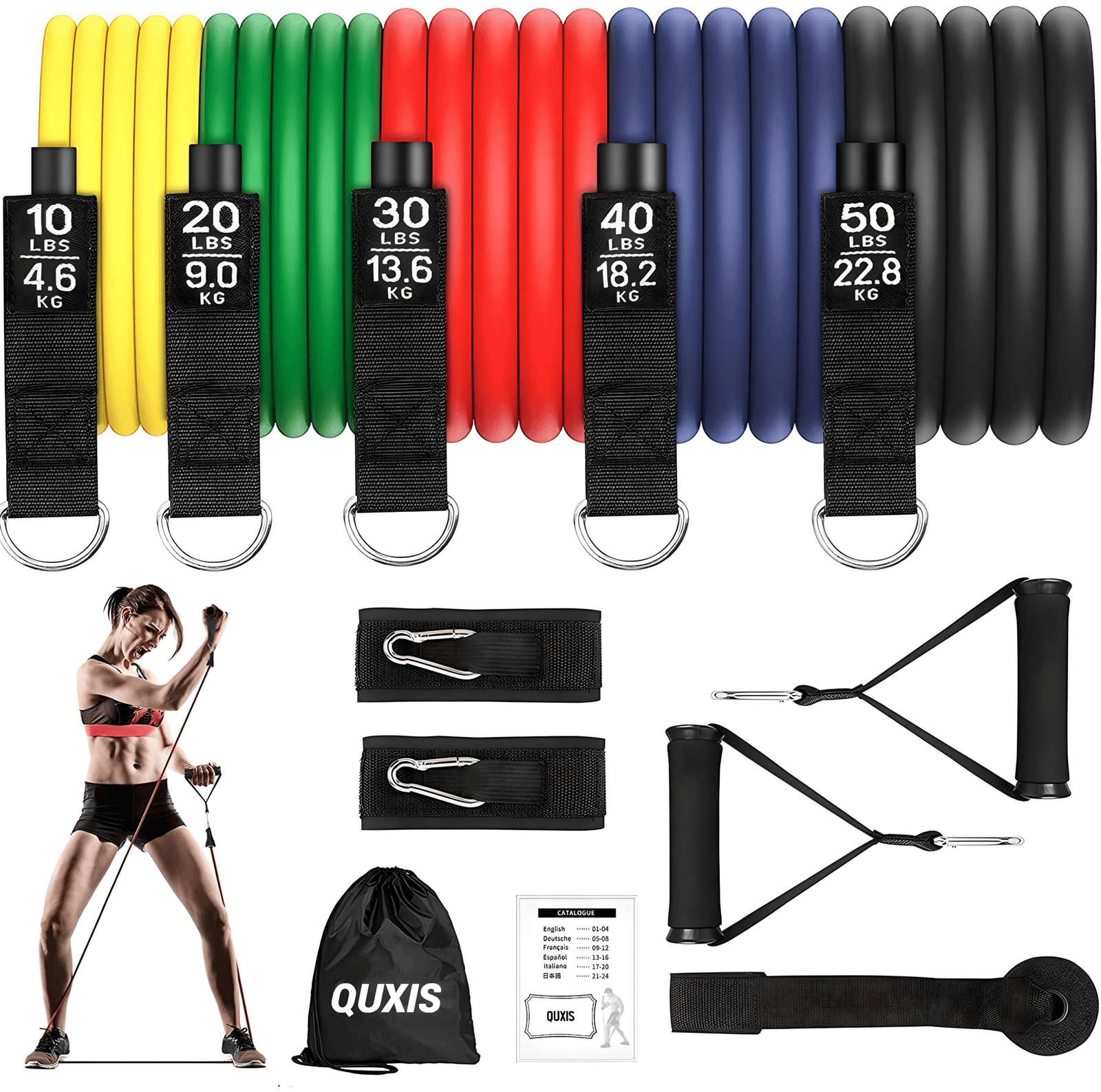
QUXIS resistance exercise bands with handles and door anchor
This is an example of a compact home-strength-training kit that may help with band rows, presses, curls and lower-body exercises. The product listing describes five colour-coded resistance levels and includes handles, ankle straps, a door anchor and a carry bag. Confirm the exact resistance ratings, included accessories, seller, return terms and current listing before purchasing.
Check QUXIS resistance bands on Amazon India
Affiliate disclosure: GHGF may earn a commission if you purchase through this link, at no extra cost to you. Resistance bands are optional equipment; body recomposition does not require this specific product.
When using resistance bands, inspect them for cuts, cracks or wear before each session. Secure door anchors correctly, keep the band away from your face, and do not stretch it beyond the manufacturer’s instructions. Stop if the band slips or feels damaged.
Common body recomposition mistakes to avoid
- Doing only cardio: aerobic activity supports health, but resistance training is important for muscle development and retention.
- Changing the plan every week: give a sensible programme time to work and track progression.
- Eating too little: aggressive restriction can undermine strength, recovery and adherence.
- Ignoring protein: include protein-rich foods consistently rather than relying on supplements alone.
- Expecting the scale to fall quickly: body weight alone cannot show the full picture.
- Skipping rest: recovery is part of training, not wasted time.
- Comparing your progress with influencers: different training histories, genetics, lighting and editing make comparisons unreliable.
Frequently asked questions about body recomposition
Can beginners lose fat and gain muscle at the same time?
Yes. Beginners and people returning to training may be more likely to experience body recomposition, especially when they combine progressive resistance training with adequate protein and a sustainable calorie intake. Results are individual and not guaranteed.
Should I bulk or cut for body recomposition?
Some people can make progress around maintenance calories, while others may benefit from a modest calorie deficit. The right approach depends on training experience, current body composition and health. Avoid extreme bulking or crash dieting.
How much protein do I need for body recomposition?
Protein needs vary. Around 1.6 g/kg/day is a common evidence-informed reference for many active adults, while some body recomposition research discusses higher ranges. Your age, training, energy intake and medical history matter; people with kidney disease should seek clinical advice.
Can I do body recomposition at home?
Yes. Bodyweight exercises, dumbbells and resistance bands can all provide resistance. Choose movements you can perform safely and make them gradually more challenging over time.
Is body recomposition possible without supplements?
Yes. Supplements are not required. A balanced diet, sufficient protein from food, progressive resistance training and recovery are the foundations.
Why is my weight not changing during body recomposition?
Your total weight may stay similar while fat mass decreases and fat-free mass increases. Track strength, waist measurements and longer-term trends rather than relying on a single scale reading.
The bottom line
Body recomposition is not a quick fix. It is a steady approach to improving body composition through progressive strength training, adequate protein, sensible energy intake and recovery. Start with a manageable three-day programme, build your strength gradually, eat balanced meals and measure progress over months—not days. Consistency and realistic expectations matter more than a perfect plan.
Medical disclaimer: This article is for general educational purposes and is not personal medical or nutrition advice. Consult a qualified healthcare professional or registered dietitian before making major dietary or exercise changes if you have a medical condition, take relevant medication, are pregnant, or have a history of disordered eating.
Sources and further reading
- Naddafah et al. (2026). Body recomposition in adults: mechanisms, modulators, and practical algorithms. Journal of the International Society of Sports Nutrition.
- Morton et al. (2018). A systematic review, meta-analysis and meta-regression of the effect of protein supplementation on resistance training-induced gains.
- Men’s Fitness (2026). Body recomposition: how to lose fat and keep or build muscle.
- Healthline (2026). How to lose fat and gain muscle for body recomposition.