Great Health Great Fitness

7 High-Protein, High-Fiber Breakfast Ideas for Busy Mornings
Make mornings easier with seven practical high-protein, high-fiber breakfast ideas, simple recipes, meal-prep tips, and everyday ingredients.
Affiliate disclosure: As an Amazon Associate, Great Health Great Fitness earns from qualifying purchases. If you purchase through links in this article, we may earn a commission at no extra cost to you.
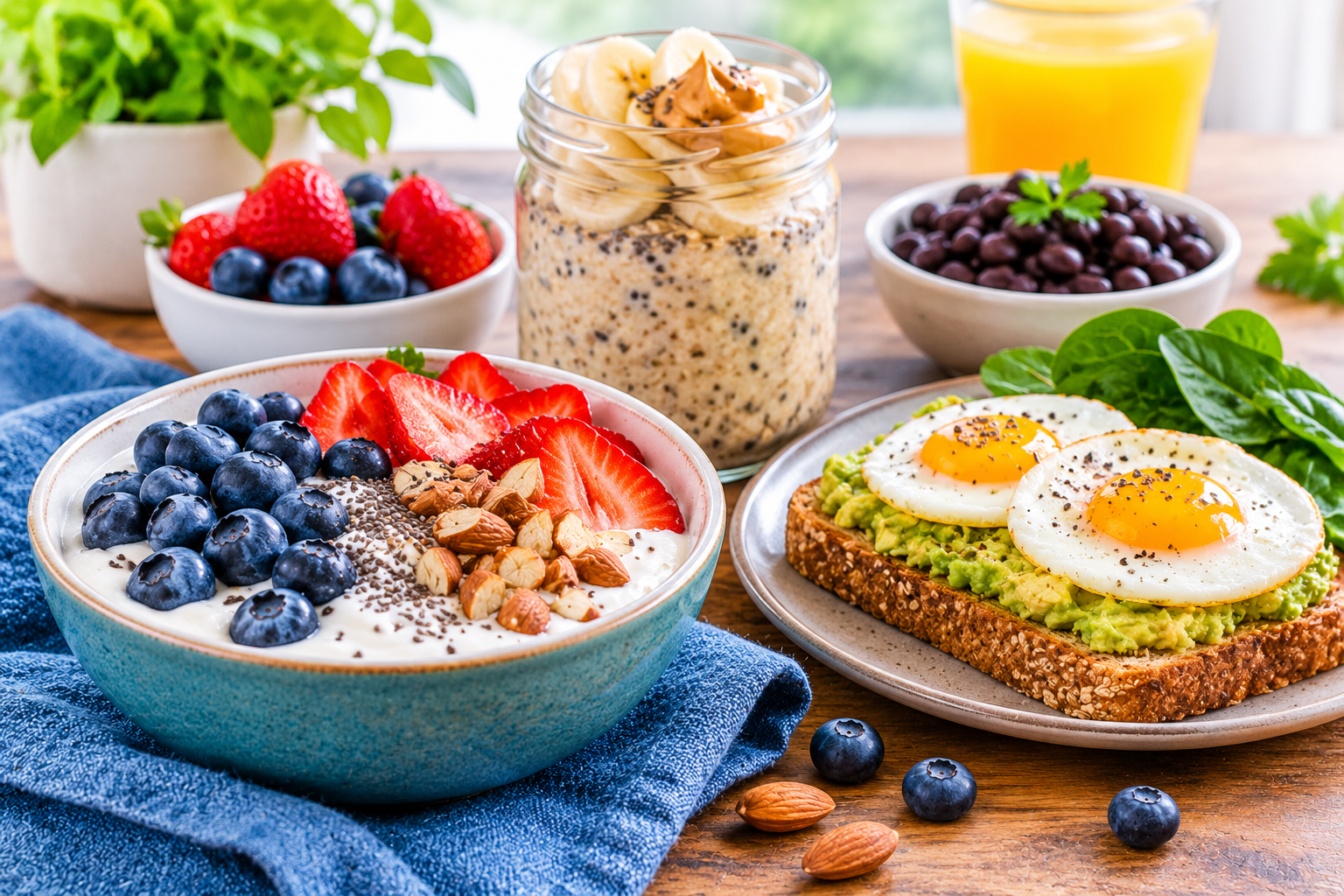
A satisfying breakfast does not need complicated recipes or expensive powders. A simple way to build one is to combine a protein-rich food—such as Greek yogurt, eggs, cottage cheese, tofu, or beans—with a fiber-rich food such as oats, berries, whole-grain bread, chia seeds, or vegetables.
Below are seven flexible breakfast ideas using everyday ingredients, along with simple ways to prepare them ahead of time.
Quick answer
Pair one protein source with one or two fiber-rich foods. Try Greek yogurt with berries and chia, overnight oats with peanut butter, eggs with whole-grain toast, cottage cheese with fruit, or a black-bean breakfast wrap. Adjust portions to your appetite and dietary needs.
What makes a breakfast high in protein and fiber?
Protein is found in foods such as eggs, dairy foods, soy, beans, nuts, and seeds. Fiber is found in plant foods, including whole grains, fruit, vegetables, beans, lentils, nuts, and seeds. Combining foods from both groups is a practical way to make breakfast more balanced.
There is no single protein or fiber target that suits every breakfast. Needs vary with age, body size, activity, health conditions, and total daily intake. Start with a protein-rich food and add a whole grain, fruit, vegetable, bean, or seed.
The Department of Veterans Affairs recommends building a balanced breakfast with a combination of protein, fiber, and healthy fats. Its examples include Greek yogurt with berries and nuts, oatmeal with fruit and nut butter, and vegetable omelets. See its Building a Balanced Breakfast guide.
7 easy high-protein, high-fiber breakfast ideas
1. Greek yogurt bowl with berries, chia, and almonds
What you need: Plain Greek yogurt, a handful of fresh or frozen berries, 1 tablespoon chia seeds, and a small handful of chopped almonds or walnuts.
How to make it: Spoon yogurt into a bowl, add berries, and finish with chia and nuts. Add sliced banana or cinnamon if you prefer a sweeter taste.
Why it works: Greek yogurt supplies protein; berries and chia add fiber, while nuts contribute healthy fats and crunch. Choose plain yogurt and sweeten it yourself if desired.
2. Peanut-butter banana overnight oats
What you need: Rolled oats, milk or an unsweetened fortified soy beverage, plain Greek yogurt, 1 tablespoon peanut butter, chia or ground flaxseed, and half a banana.
How to make it: Stir oats, milk, yogurt, peanut butter, and seeds in a covered container. Refrigerate overnight. Add banana shortly before eating. Loosen with a splash of milk if needed.
Why it works: Oats, banana, and seeds contribute fiber; yogurt, milk, and peanut butter contribute protein.
3. Eggs, avocado, and whole-grain toast
What you need: One or two eggs, one or two slices of whole-grain bread, avocado, and optional tomato or spinach.
How to make it: Cook the eggs to your preference. Mash avocado onto toasted whole-grain bread and add the eggs and vegetables. Season with pepper, lemon, or salsa.
Why it works: Eggs provide protein, while whole-grain bread and avocado contribute fiber. Add fruit or extra vegetables for a larger meal.
4. Cottage cheese with fruit, walnuts, and oats
What you need: Cottage cheese, a chopped pear or berries, a spoonful of rolled oats, and walnuts or pumpkin seeds.
How to make it: Add fruit and oats to cottage cheese, then top with nuts or seeds. For a savory version, use tomatoes, cucumber, black pepper, and whole-grain crackers.
Why it works: Cottage cheese is a convenient protein source. Fruit, oats, and nuts add fiber and texture. Compare labels if you are watching sodium, since brands can differ.
5. Warm oatmeal with milk, berries, and seeds
What you need: Rolled or steel-cut oats, milk or fortified soy beverage, berries, chia or ground flaxseed, and optional plain yogurt.
How to make it: Cook oats according to the package directions using milk or water. Stir in seeds and top with berries. Add a spoonful of Greek yogurt after cooking for extra protein and a creamy texture.
Why it works: Oats and berries supply fiber, while milk and yogurt add protein.
6. Berry and yogurt smoothie with oats
What you need: Plain Greek yogurt, frozen berries, a small handful of spinach, rolled oats, and milk or water. Add nut butter or chia seeds if you like.
How to make it: Blend until smooth. Add liquid gradually to reach your preferred thickness. For a thicker smoothie bowl, use less liquid and top with berries or nuts.
Why it works: Yogurt supplies protein; berries, spinach, and oats add fiber. Keep ingredients balanced and avoid loading the smoothie with juice or added sweeteners.
7. Black bean and egg breakfast wrap
What you need: A whole-wheat tortilla, cooked black beans, one or two eggs, salsa, and optional spinach, peppers, or a little shredded cheese.
How to make it: Warm the beans, cook the eggs, and layer them in the tortilla with vegetables and salsa. Fold and toast briefly in a skillet. For a plant-based version, replace eggs with seasoned tofu.
Why it works: Beans and whole-wheat tortillas contribute fiber; eggs or tofu add protein. Choose lower-sodium canned beans when possible, or rinse regular canned beans under water.
A simple mix-and-match breakfast formula
- Choose a protein: Greek yogurt, cottage cheese, eggs, tofu, milk, or beans.
- Add a fiber-rich base: Oats, whole-grain toast, a whole-wheat tortilla, or beans.
- Add produce: Berries, banana, pear, tomatoes, spinach, or peppers.
- Finish with a small extra: Chia, flax, nuts, avocado, or peanut butter.
Adjust portions to your hunger and overall eating pattern. A balanced breakfast does not need to contain every food group in exact proportions.
How to meal-prep breakfast without making it complicated
- Prepare overnight oats: Mix oats and seeds in advance; add milk or yogurt and refrigerate.
- Wash fruit ahead: Keep washed berries or whole fruit ready so adding produce takes seconds.
- Cook beans in batches: Refrigerate promptly in shallow containers and follow food-safety storage guidance.
- Prepare egg dishes in smaller batches: Refrigerate cooked eggs promptly and reheat thoroughly.
- Keep toppings separate: Add nuts or crunchy cereal just before eating to preserve texture.
A useful container for overnight oats
NETANY 16-Ounce Glass Overnight Oats Jars, 6-Pack
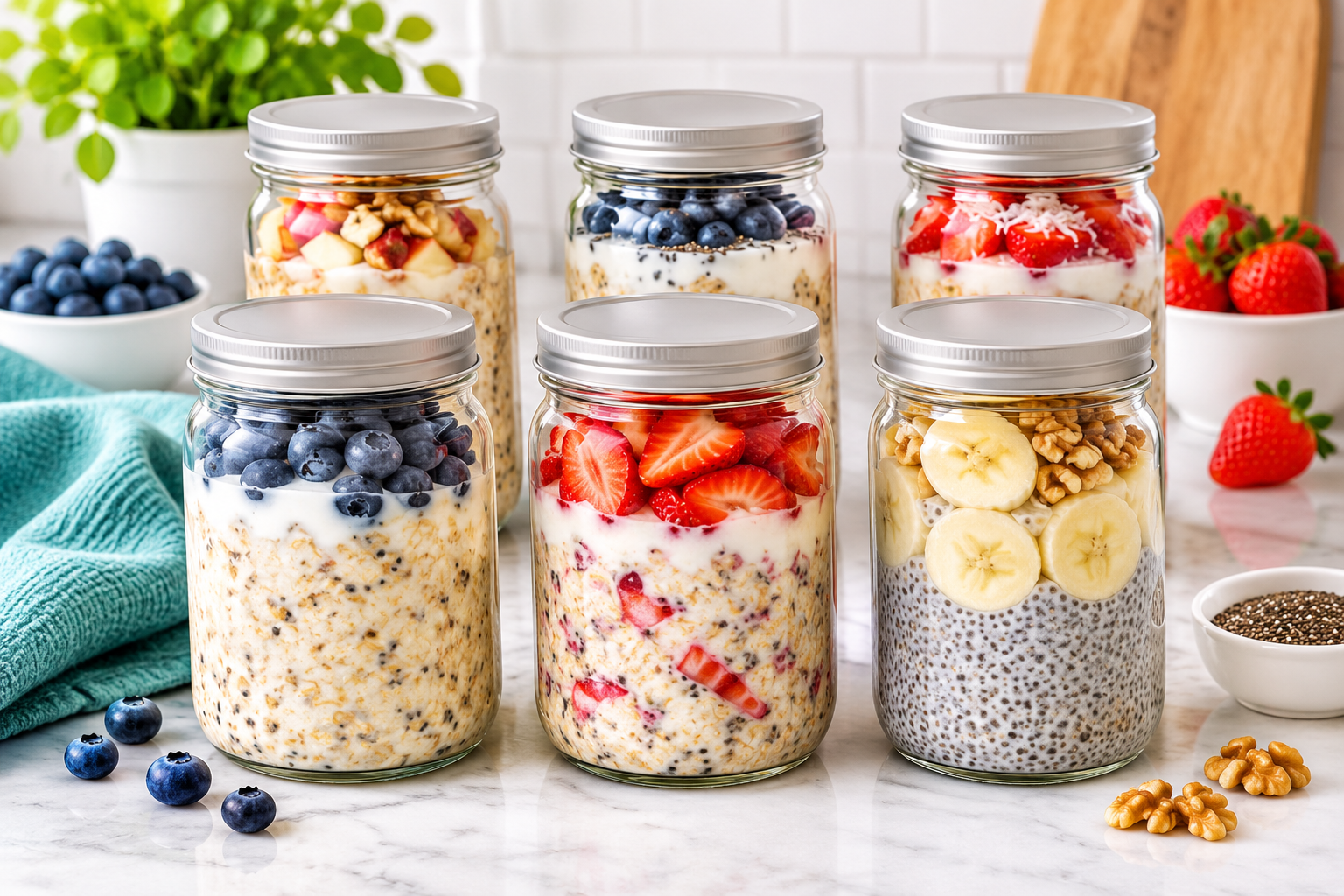
A handy option for make-ahead breakfasts
Reusable glass jars can make it easier to portion overnight oats, yogurt, chia pudding, or fruit for the next morning. This six-jar set is listed as a 16-ounce option. Check the live Amazon listing for current photos, included components, lid details, care instructions, and availability before ordering.
View the NETANY Overnight Oats Jars on Amazon
Affiliate disclosure: As an Amazon Associate, Great Health Great Fitness earns from qualifying purchases. The image above is an illustrative image of the jar style, not the exact product photograph.
You can also use any clean, food-safe container with a secure lid. A special jar is convenient, but it is not required to make overnight oats.
How much fiber should you aim for?
Fiber needs depend on age and sex. General adult recommendations commonly fall around 22–34 grams per day, with individual needs varying. Breakfast is only one part of the day, so build fiber intake across meals and snacks rather than trying to get it all at once.
If your current diet is low in fiber, increase it gradually and drink fluids regularly. A sudden large increase can cause gas, bloating, or abdominal discomfort. The Food and Drug Administration explains how to identify fiber on food labels in its Dietary Fiber guide.
Common mistakes to avoid
- Choosing protein but forgetting plants: Eggs or yogurt provide protein, but fruit, vegetables, beans, or whole grains add fiber.
- Assuming every granola or cereal is high in fiber: Compare the Nutrition Facts label and ingredient list; added sugar and fiber content vary.
- Adding too much fiber too quickly: Increase portions gradually, especially if you are not used to beans, seeds, and whole grains.
- Using supplements instead of food variety: Whole foods provide a range of nutrients. Supplements are not necessary for everyone.
- Making breakfast unnecessarily restrictive: Choose foods you enjoy and can afford. A sustainable routine matters more than a perfect-looking plate.
Frequently asked questions
What is the easiest high-protein, high-fiber breakfast?
Plain Greek yogurt with berries, chia seeds, and nuts is one of the quickest options. Overnight oats are another convenient choice because you can prepare them the night before.
Can I get protein and fiber from a plant-based breakfast?
Yes. Try oats with soy milk, chia seeds, and peanut butter, or a tofu and black-bean breakfast wrap with vegetables. Beans, soy foods, nuts, seeds, whole grains, fruit, and vegetables can all contribute.
Are eggs high in fiber?
No. Eggs provide protein but contain no dietary fiber. Pair them with whole-grain toast, avocado, beans, fruit, or vegetables to add fiber.
Is oatmeal enough protein for breakfast?
Oats provide some protein, but a bowl made with water may not be especially protein-rich. Prepare it with milk or fortified soy beverage, or add Greek yogurt, nuts, seeds, or nut butter.
Can I eat these breakfasts if I have diabetes or a digestive condition?
Many of these foods can fit into different eating patterns, but portions and ingredients may need to be individualized. People using glucose-lowering medication, following a prescribed diet, or managing kidney, gastrointestinal, or other medical conditions should ask their healthcare professional or registered dietitian how to adapt meals. Increase fiber gradually if you are prone to digestive symptoms.
The bottom line
A high-protein, high-fiber breakfast can be simple: pair yogurt with berries and seeds, eggs with whole grains and vegetables, or beans with a whole-wheat wrap. Pick two or three combinations you enjoy, keep a few ingredients ready, and rotate them through the week. Consistency and overall dietary variety matter more than any single recipe.
Sources and further reading
- Department of Veterans Affairs — Building a Balanced Breakfast (2025)
- Food and Drug Administration — Dietary Fiber guide
- Cleveland Clinic — High-Protein Breakfast: Benefits and Food Recommendations
- Tufts University — Easy, Healthy Breakfast Ideas
This article is for general education and is not a substitute for individualized medical or nutrition advice.