Great Health Great Fitness

Climate Change and Disease: A Growing Global Health Threat
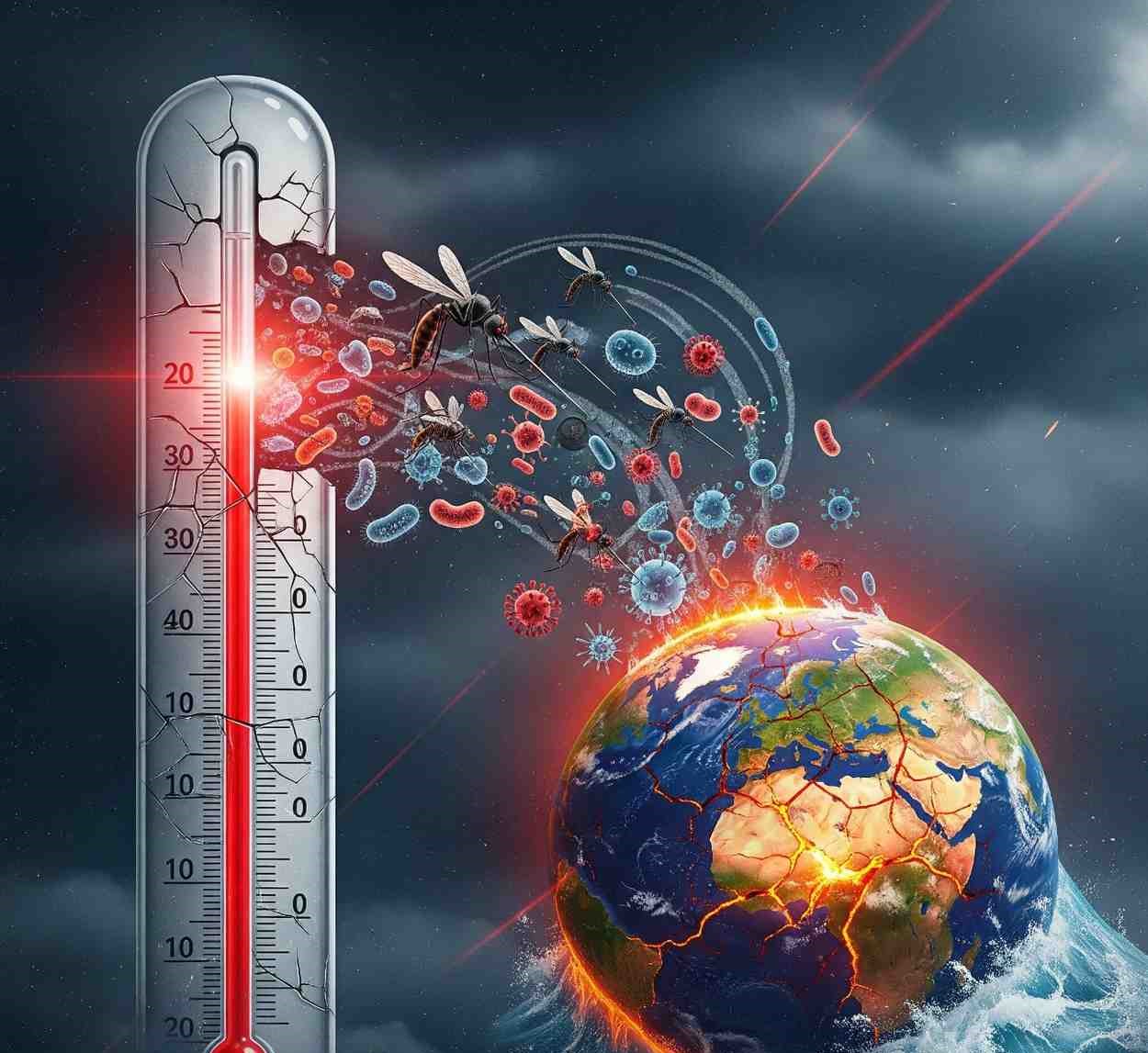
Health experts worldwide are sounding the alarm over an escalating crisis: climate change is directly fueling the spread of infectious diseases, placing billions of people at increased risk. As global temperatures rise and weather patterns become more extreme, the delicate balance of ecosystems is shifting—allowing disease-carrying organisms, such as mosquitoes and bacteria, to thrive in new regions.
One of the most immediate threats is the expansion of mosquito-borne illnesses. Warmer climates and shifting rainfall patterns have created ideal breeding grounds for mosquitoes that transmit malaria, dengue fever, and Zika virus. Once confined largely to tropical and subtropical regions, these diseases are now appearing in areas that previously had little or no exposure, including parts of Europe, North America, and higher-altitude regions of Africa and Asia. Populations in these areas often lack immunity and preparedness, making outbreaks potentially more severe.
Additionally, floods, hurricanes, and rising sea levels are increasing the risk of waterborne diseases. Contaminated water supplies following extreme weather events often lead to outbreaks of cholera, diarrhea, and leptospirosis. Countries with weaker healthcare infrastructure are especially vulnerable, as emergency response systems struggle to cope with the dual challenges of climate disasters and disease outbreaks.
Experts warn that climate change could also undermine decades of progress in disease control. Global health organizations have spent years combating malaria and dengue with mosquito nets, vaccines, and vector control programs. But if warming trends continue, these efforts may fall short as mosquitoes adapt to new environments and reproduce more rapidly.
Beyond infectious diseases, scientists are raising concerns about the indirect health impacts of climate change. Heatwaves increase the risk of dehydration, heatstroke, and cardiovascular complications, particularly among the elderly. Rising air pollution worsens respiratory conditions such as asthma and chronic obstructive pulmonary disease (COPD). Meanwhile, food insecurity caused by droughts and soil degradation threatens malnutrition, especially in vulnerable regions of Africa and South Asia.
The World Health Organization (WHO) estimates that climate change could cause an additional 250,000 deaths annually between 2030 and 2050 from malnutrition, malaria, diarrhea, and heat stress alone. These figures may even be conservative, given the rapid acceleration of extreme weather events in recent years.
Public health leaders are urging governments to act on two fronts:
- Mitigation – reducing greenhouse gas emissions to slow global warming.
- Adaptation – strengthening healthcare systems, improving early warning systems, investing in climate-resilient infrastructure, and expanding vaccination and disease surveillance programs.
The intersection of climate change and public health is now seen as one of the defining challenges of the 21st century. Without urgent climate action, experts fear that future generations may face more frequent and deadlier outbreaks, undoing decades of medical progress.
The message from scientists is clear: protecting the planet means protecting human health. Climate change is no longer a distant environmental issue—it is a present and growing public health emergency.