Great Health Great Fitness

Hypertension-Linked Kidney Disease Deaths Surge by 48% Over 25 Years, Study Warns
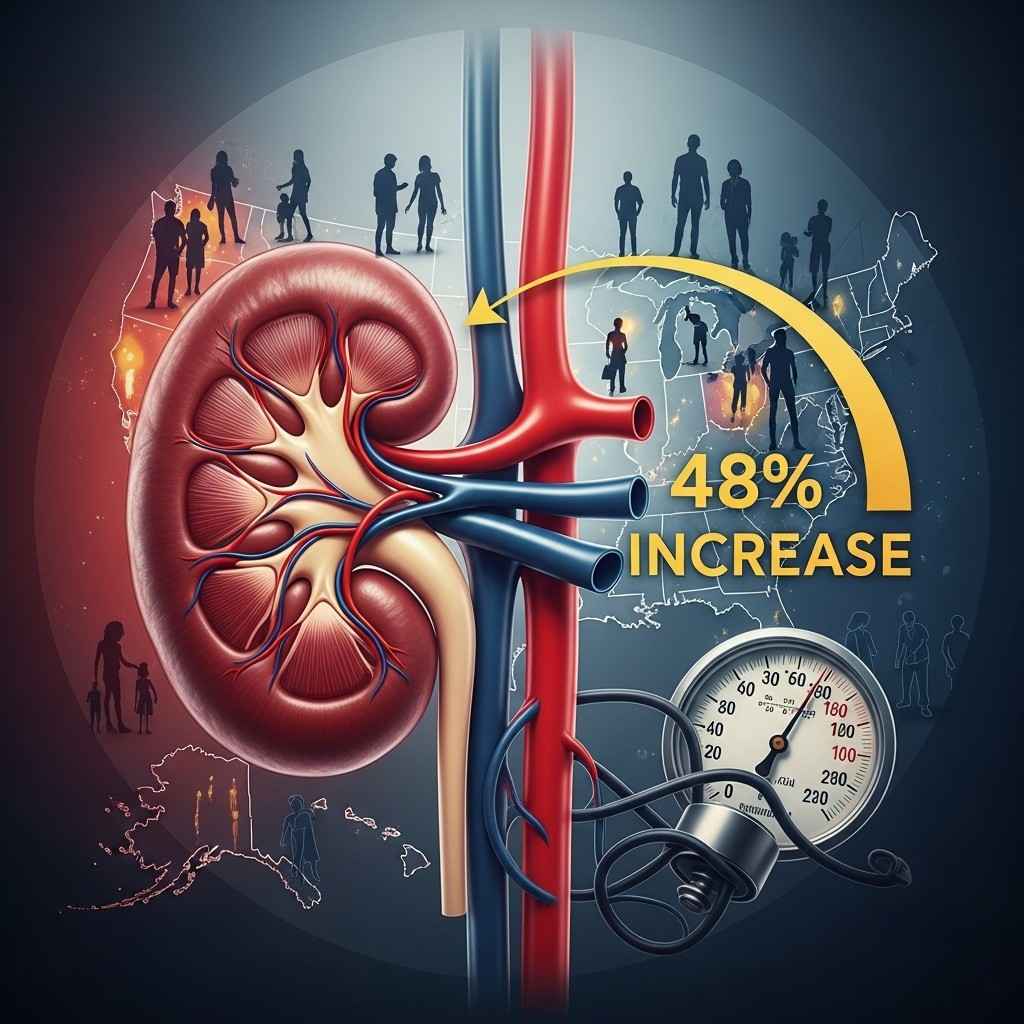
Detroit, September 10, 2025 – A groundbreaking study from Wayne State University has sounded the alarm on a silent but deadly trend: deaths caused by hypertension-related kidney disease have risen by a staggering 48% in the past 25 years, underscoring the urgent need for better prevention, early detection, and treatment strategies.
The study, conducted by a team of medical residents and researchers, analyzed national health data spanning more than two decades. Their findings reveal not only the rising toll of kidney disease linked to high blood pressure but also stark disparities across racial, geographic, and socioeconomic lines.
A Growing Silent Killer
Hypertension, often called the “silent killer”, is already known as one of the most widespread risk factors for heart disease and stroke. But this research highlights a lesser-discussed consequence: its devastating impact on the kidneys. Persistent high blood pressure damages blood vessels in the kidneys, impairing their ability to filter waste from the blood. Over time, this can lead to chronic kidney disease (CKD) and, ultimately, kidney failure.
Dr. Michael Harrison, lead author of the study, emphasized the severity of the findings:
“What we are seeing is not just an increase in numbers—it’s a public health emergency. The combination of uncontrolled hypertension and limited access to preventive care has created a dangerous scenario for millions of Americans.”
Disparities in Death Rates
The study highlights troubling disparities. African American and Hispanic communities face disproportionately higher mortality rates, reflecting long-standing inequalities in healthcare access, diet, and preventive screenings. Rural populations were also found to be at greater risk, often due to fewer healthcare facilities and delayed diagnoses.
Women, once believed to be less vulnerable to kidney complications, have also seen a sharp increase in mortality rates, narrowing the gender gap in kidney disease outcomes.
Preventable but Neglected
Experts stress that most of these deaths could be prevented with timely interventions:
- Early blood pressure management through lifestyle changes and medications.
- Regular kidney function screenings, especially for people with diabetes or family history of kidney disease.
- Public health campaigns to raise awareness about salt intake, obesity, and smoking—all factors that exacerbate both hypertension and kidney decline.
Yet, according to the study, many patients are not diagnosed until their kidney function has already significantly deteriorated, leaving dialysis or transplant as the only options.
The Call for Action
Healthcare leaders are urging policymakers to act swiftly. Expanding access to affordable blood pressure medication, community-level education, and improved insurance coverage for kidney care could make a life-saving difference.
Dr. Harrison noted:
“Hypertension-related kidney disease is a condition we know how to treat and prevent. The fact that deaths are rising, despite medical advances, shows us that access and awareness remain the biggest challenges.”
Looking Ahead
With kidney disease already placing a heavy financial burden on healthcare systems, experts warn that without intervention, the trend could escalate into a national health crisis. Kidney transplants and dialysis treatments cost billions annually, yet prevention costs a fraction of that.
The researchers hope their findings will not only drive policy changes but also encourage individuals to take charge of their health through regular blood pressure monitoring and healthier lifestyle choices.
As the study concludes:
“Hypertension may be a silent killer, but its impact on the kidneys is anything but silent. Unless we act now, the next 25 years could see an even deadlier surge.”