


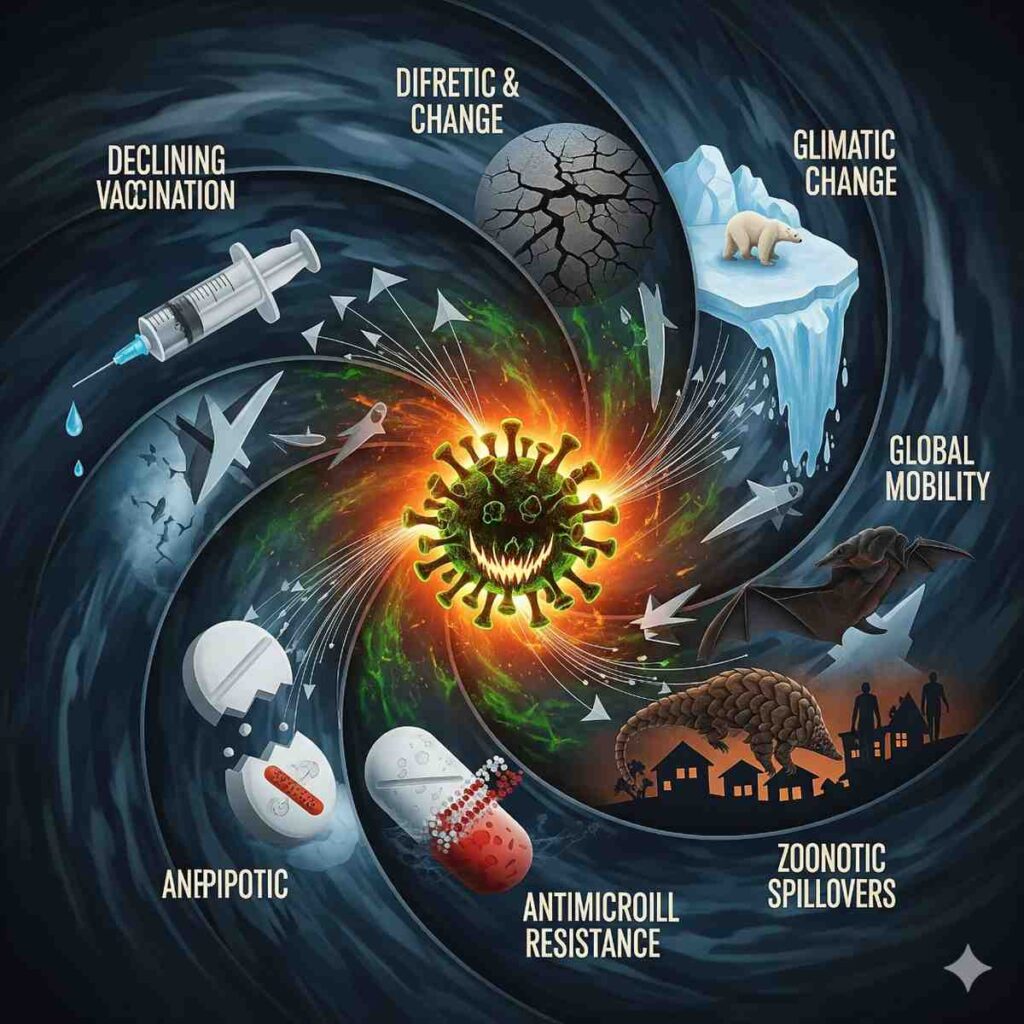
September 2025 — As the world transitions from recent public health emergencies, scientists and policymakers are warning that the battle against infectious diseases is far from over. New global drivers—ranging from falling vaccination rates to the escalating impacts of climate change—are combining to create a perfect storm for the spread of deadly pathogens.
A Fragile Moment for Global Health
The past few years have highlighted both the strengths and vulnerabilities of international health systems. While medical science has made remarkable progress in vaccines, diagnostics, and treatments, the conditions that fuel outbreaks are worsening. Experts caution that the world now faces a series of overlapping threats that could spark the next pandemic if not urgently addressed.
Dr. Maria Santos, an epidemiologist specializing in global health security, explains:
“We are living in an age where diseases can spread faster than ever before. What used to take months to cross continents now happens in days. The drivers of infectious diseases are not just biological—they are environmental, social, and geopolitical.”
The Key Drivers in 2025
- Declining Vaccination Rates
Across many regions, vaccine coverage is slipping due to misinformation, conflict, and weakened health systems. Once-controlled diseases like measles and polio are re-emerging, creating preventable crises. Public trust in vaccines has been shaken in several countries, opening dangerous gaps in immunity. - Antimicrobial Resistance (AMR)
The overuse and misuse of antibiotics in both humans and livestock have accelerated the rise of “superbugs” that no longer respond to treatment. AMR is now considered one of the greatest global health threats, with the potential to make routine surgeries, childbirth, and common infections far more deadly. - Climate Change
Rising global temperatures and extreme weather are reshaping ecosystems, expanding the range of disease-carrying insects like mosquitoes. Diseases such as dengue, malaria, and chikungunya are now appearing in regions that were once considered low-risk. Flooding and heatwaves also disrupt sanitation systems, creating fertile ground for outbreaks of cholera and other waterborne illnesses. - Globalization and Mobility
Modern travel and trade connect the world more tightly than ever. A single infection in one corner of the globe can quickly become a regional or even global outbreak. At the same time, urbanization has created mega-cities where dense populations provide the perfect breeding ground for rapid disease transmission. - Zoonotic Spillovers
Human encroachment into wildlife habitats is increasing the risk of pathogens jumping from animals to humans. The world has already seen this with viruses like SARS, Ebola, and COVID-19. Experts believe that without stronger monitoring, the next spillover could spark a pandemic even more disruptive than the last.
The Cost of Inaction
The economic and social costs of infectious diseases are staggering. In addition to the toll on human lives, outbreaks disrupt trade, education, and livelihoods. The World Bank estimates that a major pandemic could cost the global economy trillions of dollars, a stark reminder that investing in prevention is far cheaper than paying for recovery.
A Call to Strengthen Defenses
Health leaders are urging governments and institutions to take urgent steps to address these drivers:
- Rebuild trust in vaccines through transparent communication and community engagement
- Invest in new antibiotics and responsible use policies to combat antimicrobial resistance
- Strengthen climate resilience by integrating disease prevention into climate action plans
- Expand global surveillance systems for faster detection and response to outbreaks
- Protect biodiversity and wildlife habitats to reduce the risk of zoonotic spillovers
Dr. Santos adds:
“The threats are real, but they are not inevitable. With coordinated action, strong investment, and public trust, we can prevent the next health crisis before it starts.”