Great Health Great Fitness

Understanding VEXAS Syndrome: A Rare and Potentially Fatal Autoimmune Disorder
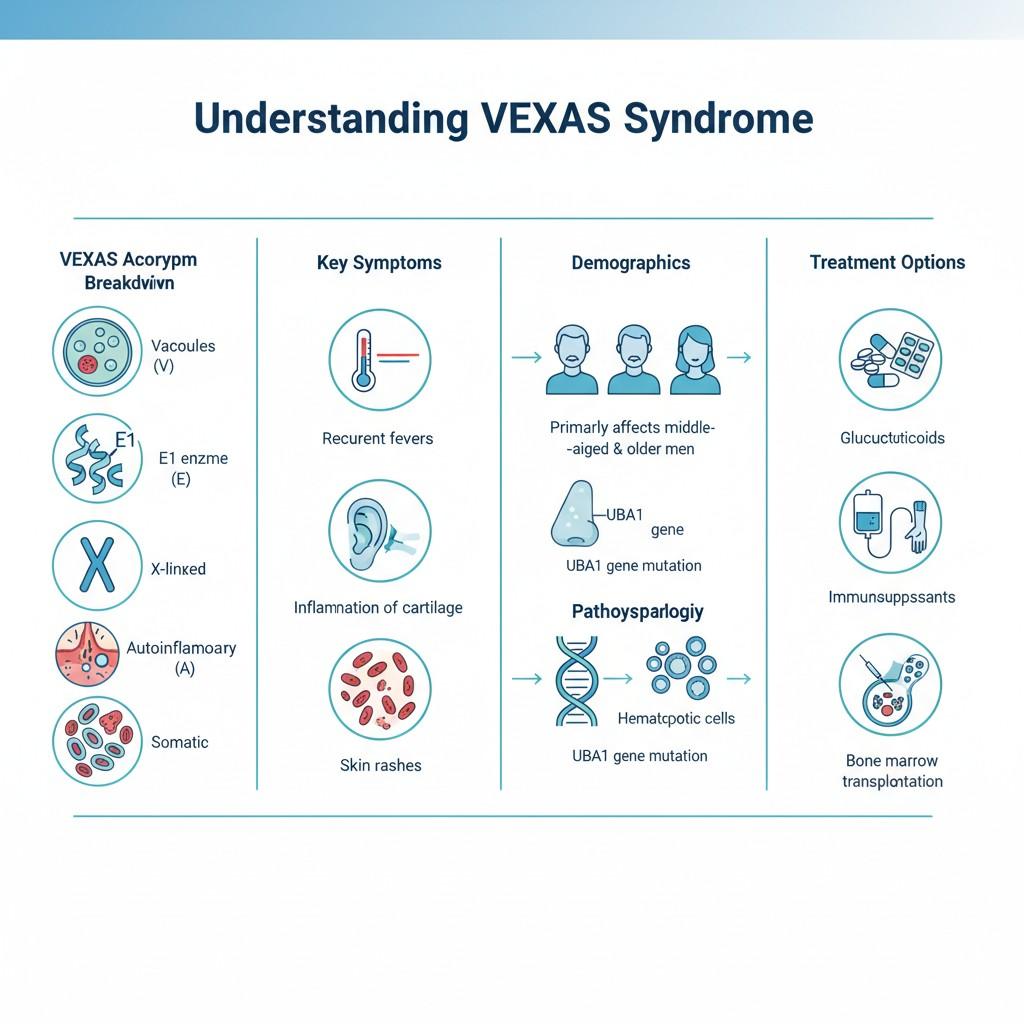
A newly discovered autoimmune disorder, VEXAS syndrome, is turning heads in the medical world due to its mysterious and potentially life-threatening effects. This rare condition primarily affects men over 50, causing widespread inflammation, severe fatigue, and other serious complications. Experts warn that early recognition is crucial for improving outcomes and saving lives.
🔬 What Makes VEXAS Syndrome Unique?
VEXAS is an adult-onset, systemic inflammatory disorder caused by a genetic mutation in the UBA1 gene, which disrupts the body’s protein maintenance system. This leads to a cascade of inflammation that can attack multiple organs, creating a wide range of troubling symptoms. The acronym VEXAS stands for:
V – Vacuoles
E – E1 Enzyme
X – X-linked
A – Autoinflammatory
S – Somatic
This rare combination of features makes VEXAS a challenge to diagnose and treat.
🩺 Recognizing the Symptoms
Patients may experience a mix of severe and puzzling symptoms:
- Recurrent high fevers
- Fatigue that impacts daily life
- Painful skin rashes and lesions
- Anemia and low blood counts
- Chondritis (inflamed cartilage)
- Vasculitis (blood vessel inflammation)
- Blood clots like deep vein thrombosis
- Shortness of breath
Because these symptoms mimic other conditions, many patients go years without a proper diagnosis. Genetic testing and bone marrow analysis are critical to confirm VEXAS.
🧬 How VEXAS Affects the Body
The mutation in the UBA1 gene disrupts the ubiquitin-proteasome system, responsible for breaking down damaged proteins. When this system fails, proteins accumulate, triggering severe inflammation throughout the body. This explains the multi-organ impact and the wide array of symptoms seen in patients.
⚠️ Who Is at Risk?
- Predominantly men over 50
- Not inherited—results from a genetic mutation acquired during life
- Estimated to affect 1 in 4,000 men in this age group
Awareness is low, so many cases remain undiagnosed or misdiagnosed.
💊 Treatment Options
While there is no cure yet, doctors are exploring strategies to manage symptoms and inflammation:
- Steroids: Reduce inflammation but carry long-term risks
- Immunosuppressants: Drugs like azacitidine can help control symptoms
- Bone Marrow Transplants: Considered in severe, life-threatening cases
Early detection is key—the sooner the disease is managed, the better the chances for improved quality of life.
🔍 Why Awareness Matters
VEXAS syndrome is often mistaken for other inflammatory disorders such as vasculitis or relapsing polychondritis. Education for both patients and healthcare providers is critical to prevent delays in diagnosis and treatment.
🌟 The Takeaway
VEXAS syndrome may be rare, but its impact is serious. With early recognition, targeted treatment, and increased awareness, patients can manage symptoms and live fuller lives. Medical research is ongoing, and each discovery brings hope to those affected by this elusive and complex condition.
Stay informed. Recognize the signs. Share the knowledge.