


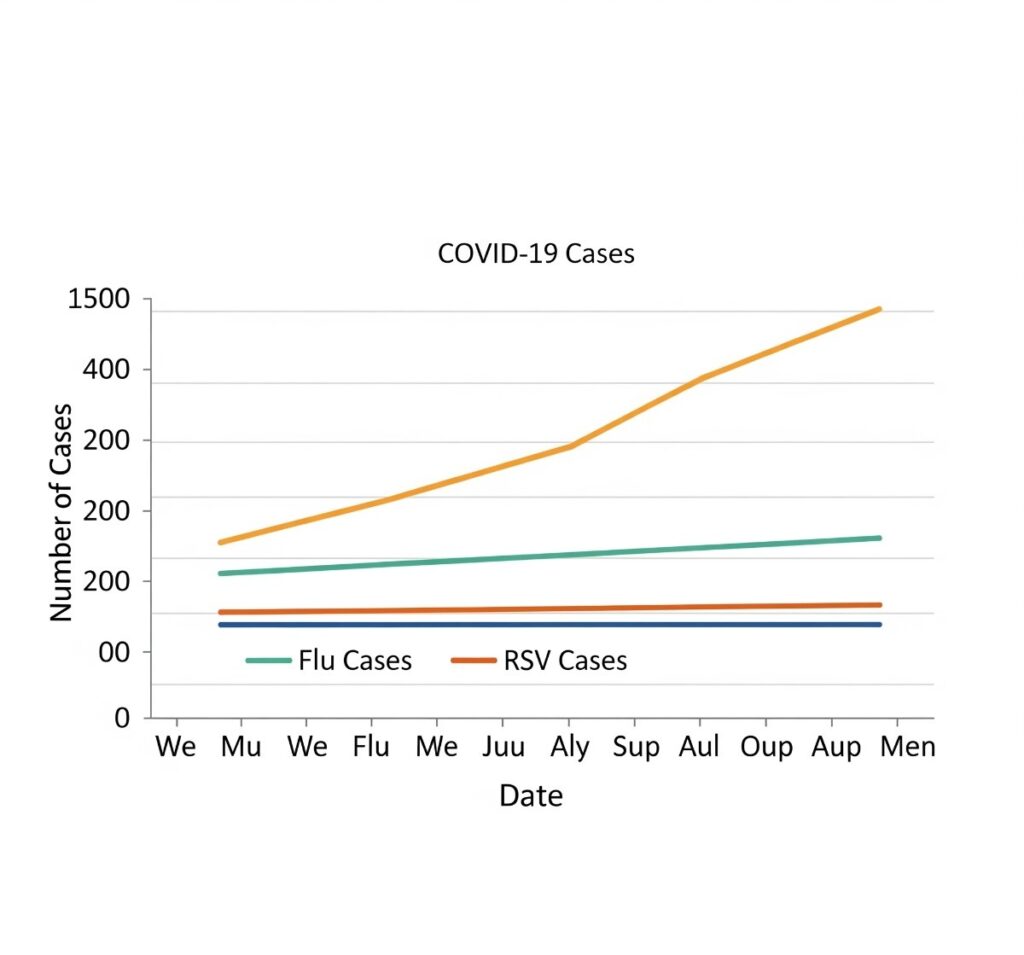
Washington, D.C., August 25, 2025 – Just as Americans were beginning to breathe easy, the Centers for Disease Control and Prevention (CDC) has flagged a new development: COVID-19 infections are rising again in parts of the United States. The increase is modest, but significant enough for health experts to issue early warnings, especially as the nation edges closer to the fall and winter seasons when respiratory illnesses traditionally spike.
📊 The Current Snapshot: Numbers That Matter
According to the CDC’s weekly respiratory illness surveillance report, the overall acute respiratory illness activity remains very low across the country. However, the data paints a mixed picture:
- COVID-19 cases are creeping upward in several states, particularly in densely populated cities and areas with high summer travel.
- Flu (influenza) activity is still unusually quiet for this time of year, with no widespread outbreaks reported.
- RSV (Respiratory Syncytial Virus) levels remain minimal, a welcome relief for hospitals that often face pediatric surges.
While flu and RSV are holding steady, COVID-19 is showing movement again, suggesting that the virus still has the power to disrupt, even if only in smaller waves.
🦠 Why Are COVID-19 Cases Rising Again?
Several factors are believed to be behind this uptick:
- New Omicron Subvariants – Scientists have been tracking fresh mutations of the Omicron lineage. While most remain less severe than earlier strains, they spread quickly and can dodge partial immunity.
- Summer Travel & Gatherings – Airports have been packed, concerts and sports events are back at full swing, and large family reunions are common. This level of social mixing makes the virus’ job easier.
- Fading Immunity – Millions of Americans haven’t received a COVID-19 booster in over a year. Immunity from past infections is also waning, leaving room for reinfections.
- Public Complacency – With masks gone in most places, fewer people are testing themselves, and many assume COVID-19 is no longer a threat. This has created blind spots in tracking the virus.
Dr. Michael Turner, an infectious disease researcher in Boston, warns:
“It’s not a crisis yet, but it’s a reminder. COVID-19 is unpredictable. Even when it’s quiet, it can suddenly roar back. We need to keep one eye open.”
📚 Lessons From the Past
This isn’t the first time Americans have seen small summer surges. In 2022 and 2023, hospital admissions ticked upward during late August and September, often followed by stronger waves in the winter.
The difference now is that hospitalizations remain low and vaccines are widely available. Still, experts caution that complacency is dangerous.
🌍 The Global Picture
The U.S. is not alone. Several European countries are reporting modest increases in COVID-19 cases, and parts of Asia have seen localized outbreaks linked to new variants. Historically, these regions act as early warning systems for the U.S., since new waves often travel westward within weeks.
Meanwhile, other viruses continue to stir globally:
- Nipah Virus in India has placed hundreds under medical observation.
- Oropouche Virus is spreading in South America with over 11,000 cases.
- West Nile Virus has already struck in Queens, New York, raising mosquito-borne disease concerns at home.
This shows how interconnected global health really is—a virus outbreak anywhere can become a U.S. issue if not monitored closely.
🛡️ What Americans Can Do Now
Health officials are not calling for drastic action, but they strongly advise simple steps to stay ahead:
- Get vaccinated – A new booster targeting recent variants will roll out in the fall. Experts say this is the best protection against severe illness.
- Keep testing kits at home – Even if mild, identifying COVID-19 early prevents spread to vulnerable family members.
- Mask wisely – While not mandatory, wearing a mask in crowded indoor spaces can reduce risk significantly.
- Watch symptoms carefully – Common signs like cough, fever, fatigue, and loss of taste or smell should prompt immediate testing.
- Don’t forget basic hygiene – Handwashing and avoiding close contact when sick still matter.
🏥 Are Hospitals Ready?
So far, U.S. hospitals report no surge in admissions. Emergency rooms are quieter compared to past years when RSV and flu collided with COVID-19 to create what experts called a “triple-demic.”
Dr. Sandra Lee, a hospital administrator in Chicago, expressed cautious optimism:
“We are better prepared than before. We have vaccines, antivirals, and stronger public awareness. The challenge is not medical tools—it’s public behavior. If people ignore symptoms and precautions, hospitals could still feel the pressure.”
✅ Bottom Line
For now, the U.S. is in a comfortable position—low flu, low RSV, and only a gradual rise in COVID-19. But the situation could shift quickly as fall and winter approach.
👉 The key takeaway? COVID-19 hasn’t gone away. It’s evolving, adapting, and waiting for opportunities. Staying alert today means fewer surprises tomorrow.
✨ Reader Note: Don’t panic—but don’t be careless either. COVID-19 is whispering, not shouting, but if ignored, whispers often turn into echoes we can’t ignore.