Great Health Great Fitness

The Invisible Arms Race: Hospitals and Health Systems Adopt AI-Driven Tools to Anticipate Epidemics
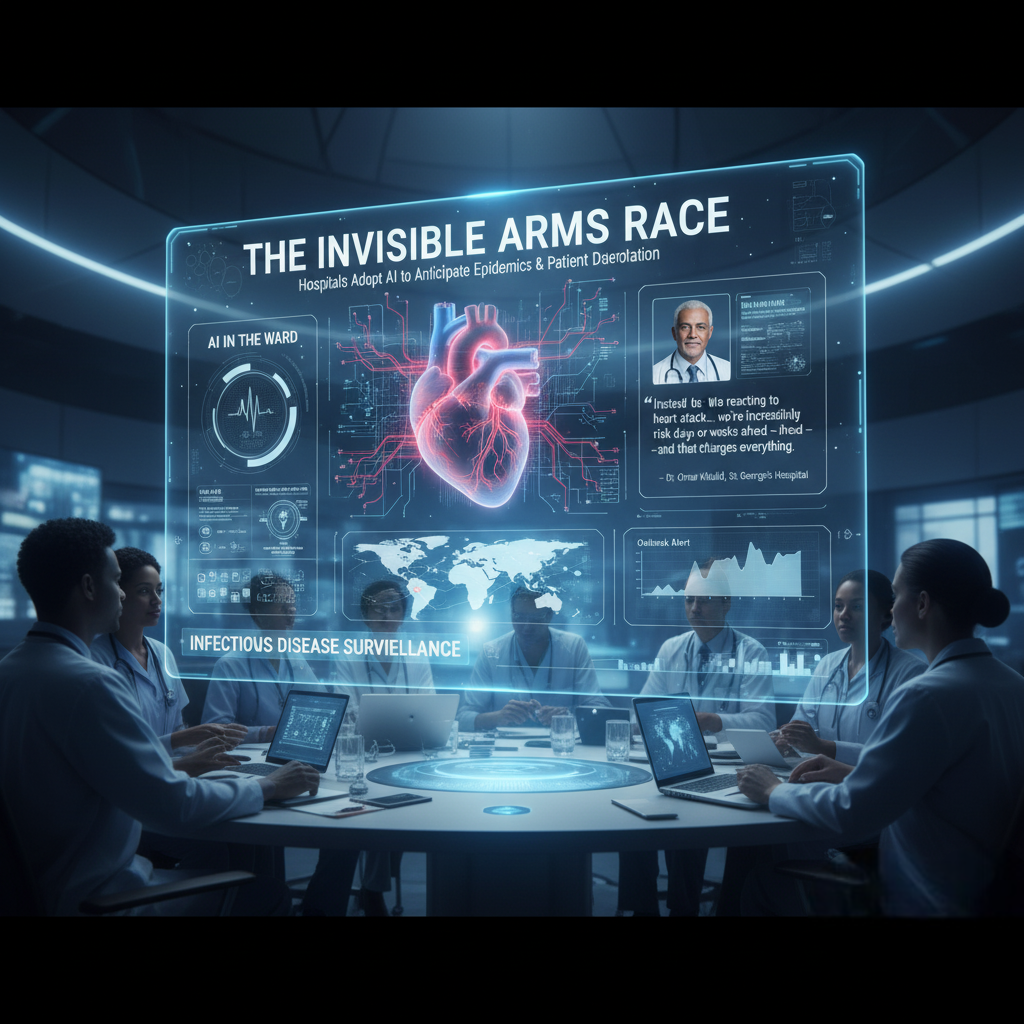
Hospitals globally are moving from reactive care to proactive surveillance, using AI to predict outbreaks and patient deterioration
Across multiple countries, hospitals and health systems are now leveraging artificial intelligence (AI) and big-data analytics to move from responding to disease after it strikes, to anticipating health threats before they fully blossom.
AI arrives in the ward
In Europe and North America, hospital systems have begun integrating AI models into clinical workflows. These systems continuously analyse real-time data — vital signs, lab results, imaging, patient movement, ambient conditions — to highlight early signals of deterioration (sepsis, cardiac events) or detect emerging infectious-disease clusters.
Case in point: heart attack prediction
One of the most vivid applications involves cardiac care. AI models trained on large datasets of patient histories, biomarkers and imaging can now identify individuals at high risk of heart attack weeks before the event. Physicians can then intervene with preventive therapies, lifestyle counselling or adjusted medications.
Dr. Omar Khalid of St. George’s Hospital in London describes the shift:
“Instead of reacting to a heart attack when someone comes into the emergency room, we’re increasingly identifying risk days or even weeks ahead—and that changes everything about how we care for patients.”
Infectious-disease surveillance upgrade
Beyond individual patient risk, AI also supports population-level health security. Several health systems partner with national laboratories and public-health agencies to spot spikes in symptoms (via electronic health records), detect unusual pathogen-genome changes, and trigger early warnings of outbreaks. With vector-borne diseases, respiratory viruses or antibiotic-resistant pathogens, this gives a chance to contain events sooner.
Benefits and impact
- Reduced mortality and costs: Early interventions triggered by AI predict patient deterioration, reduce ICU admissions and shorten hospital stays—lowering costs and improving outcomes.
- Improved workflow: AI tools streamline alerts, free clinicians to focus on high-impact tasks, and reduce ergonomic burnout from data overload.
- Community health: Predictive models help allocate resources (vaccines, staffing) ahead of surge waves, helping health systems remain resilient.
The hurdles
- Data quality & bias: AI is only as good as the data underlying it. Incomplete, biased or siloed datasets can produce incorrect predictions or amplify disparities.
- Ethical & privacy concerns: The constant aggregation of patient data raises questions about consent, algorithm transparency and misuse.
- Integration and trust: Clinicians often distrust “black-box” AI outcomes unless the models are interpretable, validated, and seamlessly integrated into existing workflows.
- Regulation and standardisation: Unlike drugs or devices, many AI tools still lack consistent regulatory pathways in different countries, complicating adoption and cross-border scalability.
Looking ahead
AI in healthcare is still in its early phase, but momentum is accelerating. Experts predict by 2030 the majority of tertiary hospitals will use AI-augmented decision-support, while regional public-health agencies will rely on algorithmic signals to trigger outbreak responses. The shift promises a future where health systems don’t just react—they anticipate.
Why it matters
As the world faces rising burdens of both chronic and infectious disease, and كما (as) climate change, urbanisation and ageing drive new pressures, proactive healthcare capability becomes vital. AI gives health systems a chance to move from a perpetual state of catch-up to one of readiness and agility.