Great Health Great Fitness

Rare Horse-to-Human Infection Lands Teen in Hospital for Six Weeks
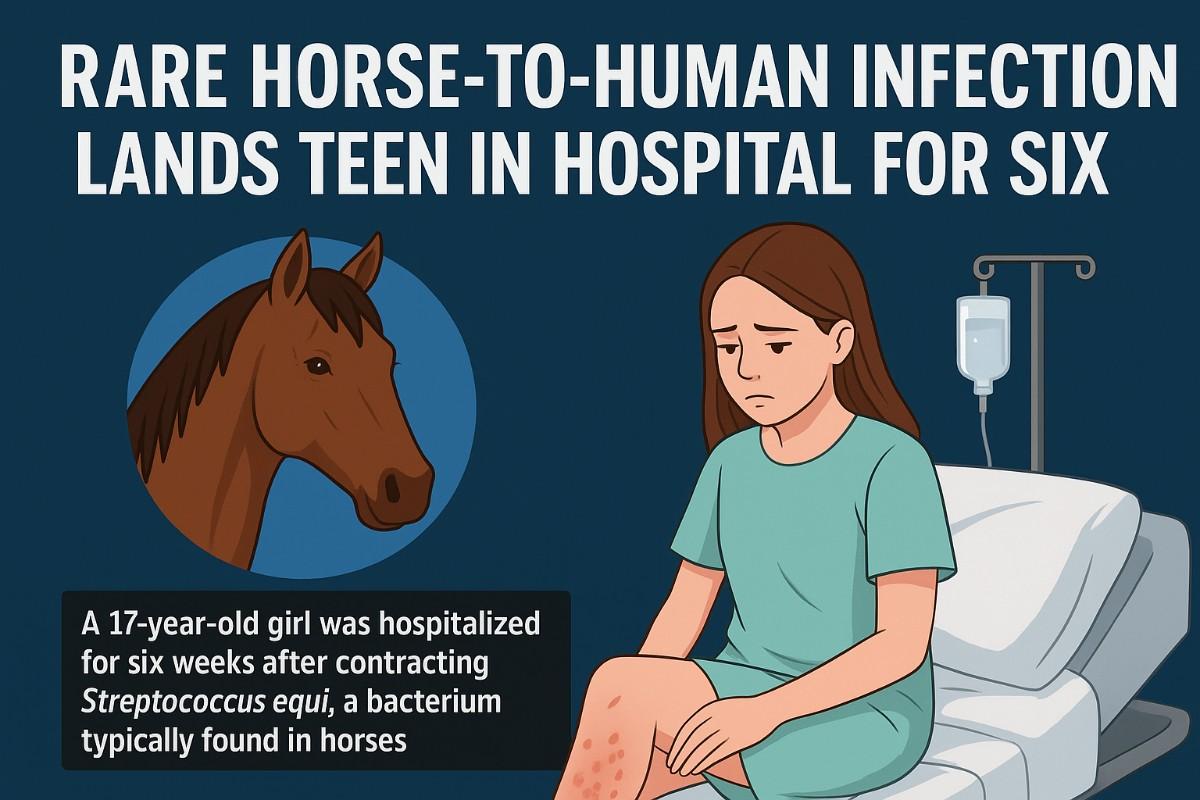
Limerick, Ireland — August 26, 2025 — In a rare and alarming medical case, a healthy 17-year-old girl required six weeks of intensive treatment after contracting a bacterial infection—Streptococcus equi, the same organism that causes “strangles” in horses—following exposure at a grooming event. Doctors warn this underscores the need for meticulous exposure history in rare zoonotic diagnoses.
Full Report
Initial Illness & Return to Work
The young woman first came to the emergency department at University Hospital Limerick (UHL) with general symptoms—sore throat, cough, fever, and malaise. After two days of mild improvement, she participated in a local horse grooming show. Shortly thereafter, she deteriorated rapidly with a rash on her left leg, swelling, and a painful limp.
Dual Diagnosis: Influenza B Might Have Let Her Guard Down
Initial tests revealed she was infected with Influenza B. Doctors suspended her physical activity and asked her to rest—but blood cultures later confirmed Streptococcus equi. Clinicians believe the flu may have transiently weakened her immune defenses, creating a gateway for a rare bacterial infection.
A Grueling Treatment Journey
Upon readmission, she was diagnosed with serious complications: bacteremia (bloodstream infection), cellulitis (skin infection), and myositis (severe inflammation of muscle tissue). MRI scans of her thigh confirmed micro-abscesses in the adductor minimus muscle and other signs of muscle damage—but thankfully not necrotizing fasciitis. She initially received IV Ceftriaxone, later switched to Benzyl Penicillin, and ultimately Daptomycin (due to a penicillin allergy), administered via a PICC line over six weeks.
Recovery & Ongoing Follow-Up
By week nine, her blood markers (creatine kinase and CRP) had normalized. An MRI two months post-treatment showed significant improvement, with only mild residual muscle swelling remaining.
What Makes This Case So Significant?
- Zoonotic Transmission Is Real—Even When It’s Rare
Streptococcus equi is a known pathogen in horses, rarely infecting humans. When it does, it can lead to severe illness including bacteremia, sepsis, septic arthritis, myositis, and even heart valve infections. - Influenza B as a Risk Amplifier
Transient immunosuppression from the flu likely played a key role in making the young patient vulnerable to this unusual infection—a reminder that even common viruses can pave the way for more serious threats. - Clinical Vigilance Through Patient History Can Save Lives
Despite the rarity of human S. equi infections, UHL clinicians stress how crucial it is to ask about animal exposures—especially when symptoms divert from typical patterns. - Prompt Intervention Can Prevent Catastrophic Outcomes
Thanks to rapid diagnosis, targeted intravenous antibiotics, and careful monitoring, the teen experienced a nearly full recovery—even though mortality in vulnerable groups can range from 33% to 66% without proper treatment.
Key Takeaways for the Public & Practitioners
| Lesson | Insight |
|---|---|
| Exposure matters | Communicate even rare animal contact—especially with horses—to healthcare providers. |
| Watch for compounding infections | A concurrent flu can mask or amplify risk for a dangerous secondary infection. |
| Stay alert | Unusual rashes, swelling, or limping after minor illness warrant prompt evaluation. |
| Stay informed | Zoonotic pathogens are rare—but when they strike, early detection and aggressive care make all the difference. |